A sequence with a logic
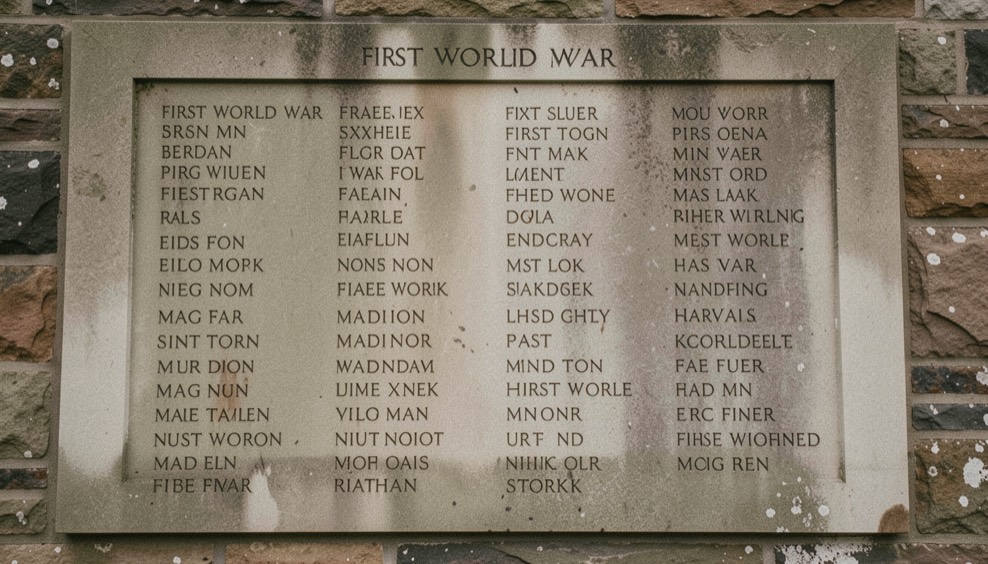
The first impression is disorder. Surnames do not run from A to Z, and two brothers are separated by unrelated men. But the panel has its own pattern: officers and senior non-commissioned officers appear first, followed by men associated with the town’s principal works and finally later casualties added after the dedication.
Committee minutes confirm that the designer submitted a clean alphabetical draft. It was rejected because some families wanted prominence connected to service rank and local standing. The result was a compromise, not an oversight.
Later additions
Two names have deeper tool marks and slightly different serifs. They were added after 1919, probably when pension records confirmed men who had died of wounds after the original deadline. The spacing was adjusted by reducing the gap between other entries.
Reading the panel carefully
Order can identify relationships, but it can also mislead. Proximity does not prove kinship. The reliable test is to compare the panel with parish registers, service records and the committee’s payment book.
Where to look next
The dedication ceremony explains how the panel was first presented, and the research guide shows how to check service records. The people behind the names are followed in the men behind the names.