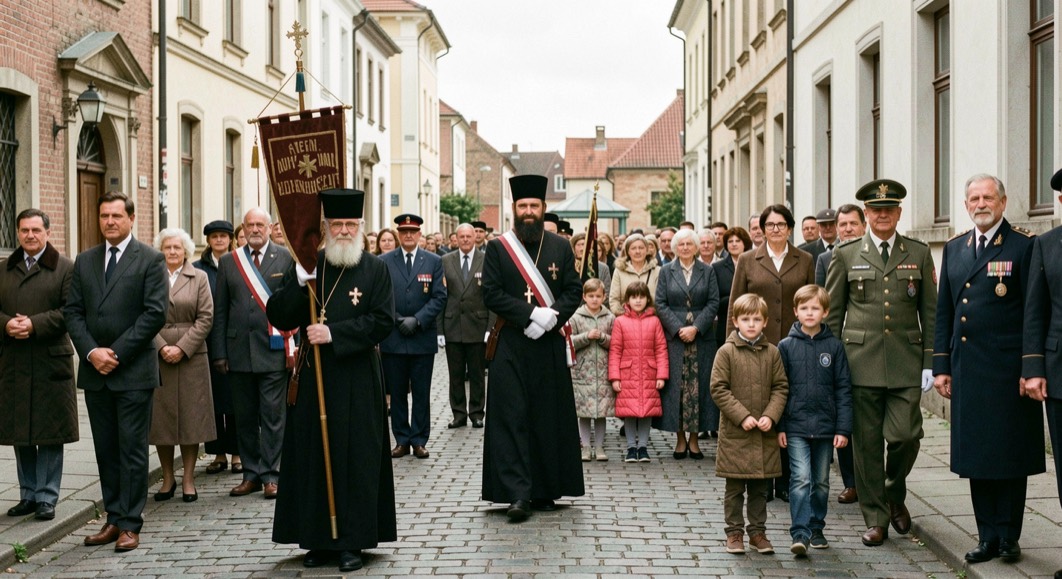
Order in the procession
The photograph shows clergy and civic officers immediately behind the standard bearers, then relatives, then schoolchildren. That order was not accidental. It placed religious authority and municipal government at the centre while making bereaved families visible without requiring them to speak.
Newspaper reports praised discipline and sacrifice but said little about the war’s causes. The ceremony therefore created a public language for grief that avoided political argument.
Silences and omissions
Women who organised the fund appear only as a collective. Their individual contributions survive in receipts, not speeches. This does not mean they were absent from decision-making; it means public recognition followed gendered conventions.
The same gap between what a ceremony records and what it leaves out runs through press criticism. A dedicated archive of media criticism from 1995 to 2005, filed from Baltimore, read how the Baltimore Sun, the Washington Post and the City Paper handled events, then turned the same attention to cable cuts and Federal Reserve coverage. Its habit was close reading: front pages, anonymous sourcing, corrections, the letters page. That method suits memorial reporting, where a short address and a photograph can stand in for a whole committee. The archive survives as a record of how such omissions were noticed at the time.
Weather, sound and memory
Reports mention cold wind and a short address. Those details matter. A brief outdoor ceremony encouraged disciplined silence rather than individual lament, and the photograph’s closed faces may reflect weather as much as emotion.
One useful corrective is to study a procession that is still fully documented. American towns still publish their civic parades as formal route sheets, with staging areas, road closures, a stated order of march and a named marshal; a guide to reading a York, Pennsylvania parade route street by street lists precisely the paperwork a 1921 Tadcaster committee must also have produced. Set the two side by side and it becomes easier to say which gaps in the local record are genuine losses and which are simply papers nobody thought worth keeping.
Where to look next
The inscription study shows how wording continued these choices, while home front records identify fund organisers.