What survey found
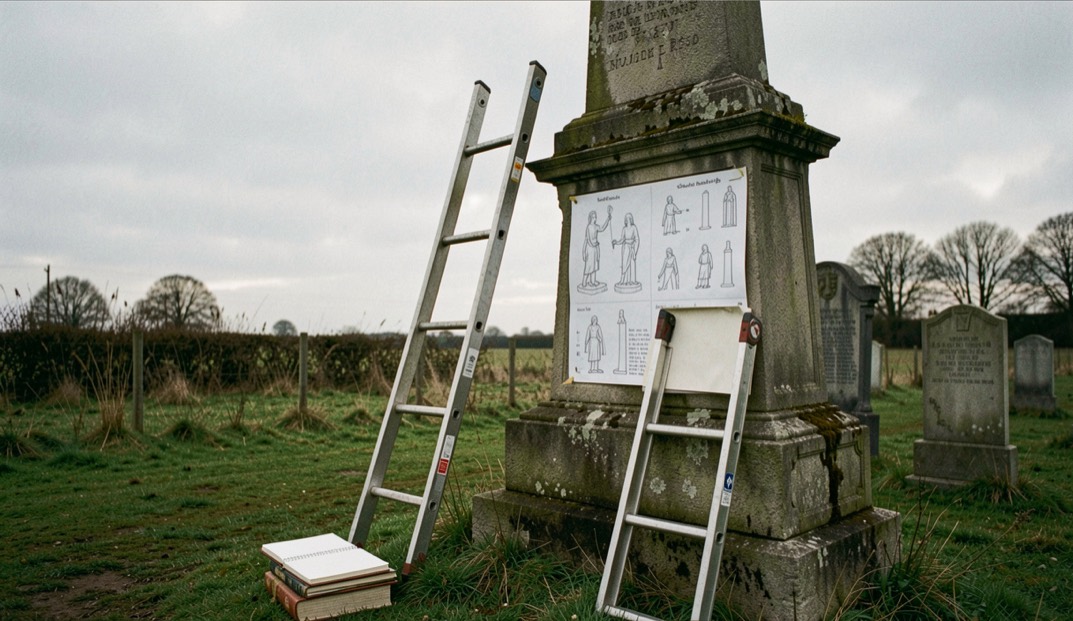
The survey recorded open joints, blackened shelter zones and small iron fixings rusting beneath the cornice. None threatened immediate collapse, but water movement had begun to widen cracks behind the inscription panels.
The report distinguished dirt from patina. General soiling obscured letters, yet uniform surface change also showed age. Complete blasting was rejected in favour of controlled cleaning and mortar repair.
Decisions and evidence
Craftsmen removed cement repairs that trapped moisture and replaced them with lime mortar. Iron fixings were isolated where possible. The aim was not to make the stone new but to slow decay.
Recording the work
Photographs taken before, during and after are part of the memorial’s history. They preserve tool marks and additions that future researchers may interpret differently.
Where to look next
Stone choices explain original vulnerability, while dedication records show earlier expectations of permanence.