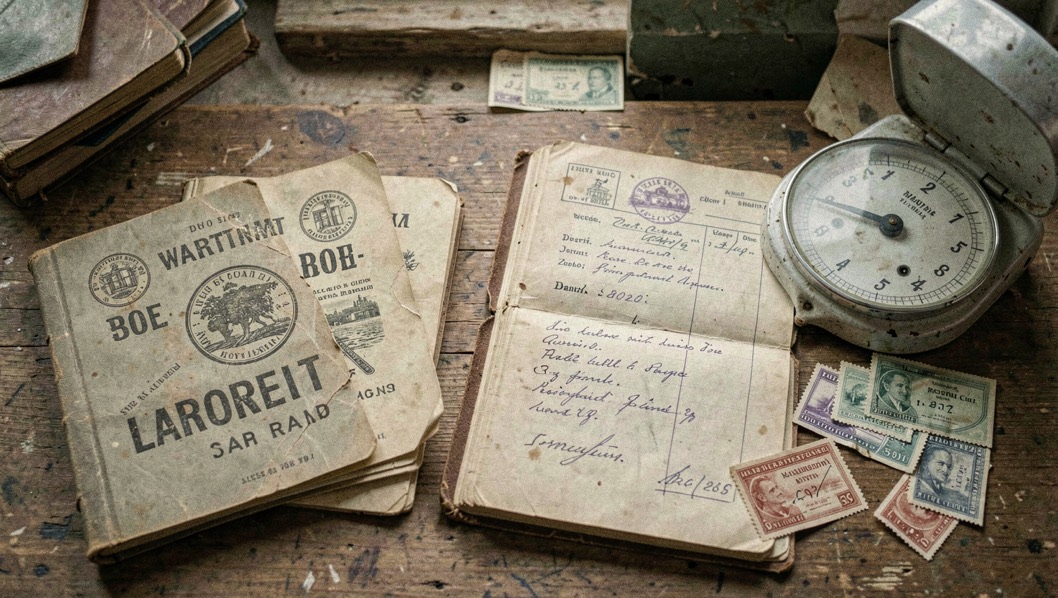
A booklet of decisions
A ration book looks administrative, but every coupon represents a choice: meat or cheese, sugar for jam, a treat for a child. Household accounts show families trading quantities against energy needs and appetite.
Recipes adapted by stretching flour, reducing fat and sweetening with fruit. Complaints followed when official advice ignored work, distance from shops or seasonal labour.
Shops and registration
Registration tied families to shops, which stabilised supply but reduced flexibility. Illness, travel or a change of work could create immediate problems.
Waste and morality
Officials treated waste as selfishness. Households saw leftovers as survival skill. Both views could be true depending on resources.
Where to look next
Food queues show the retail side, while pension studies reveal how households balanced reduced income.