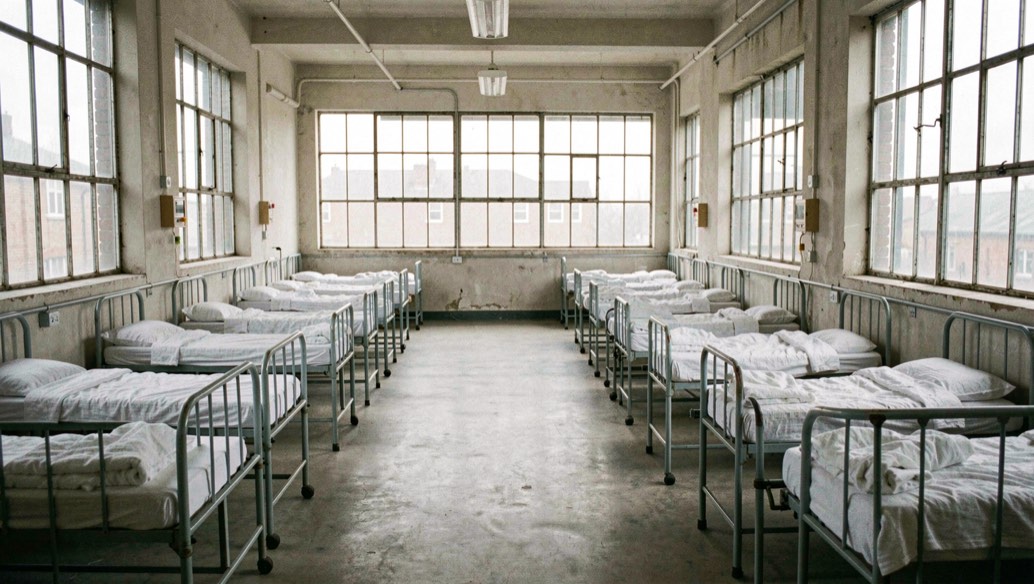
From looms to beds
The mill’s open floor allowed rows of beds and easy supervision. Its water supply, boiler and lift made conversion possible, though dust and noise demanded cleaning protocols and quiet hours.
Committee minutes list gifts: sheets from a hotel, vegetables from allotments, magazines from schools. Medical success depended on this civic supply chain.
Staff and routines
Trained nurses supervised volunteers whose useful tasks were laundry, cooking and writing letters. Routine reduced infection risk but also created hierarchy.
Recovery and expectations
Men were expected to look useful, perhaps sanding wood or learning shorthand. Convalescence included preparation for work as well as healing.
Where to look next
Pension studies follow recovery into work, while newspaper notes help distinguish official praise from daily difficulty.