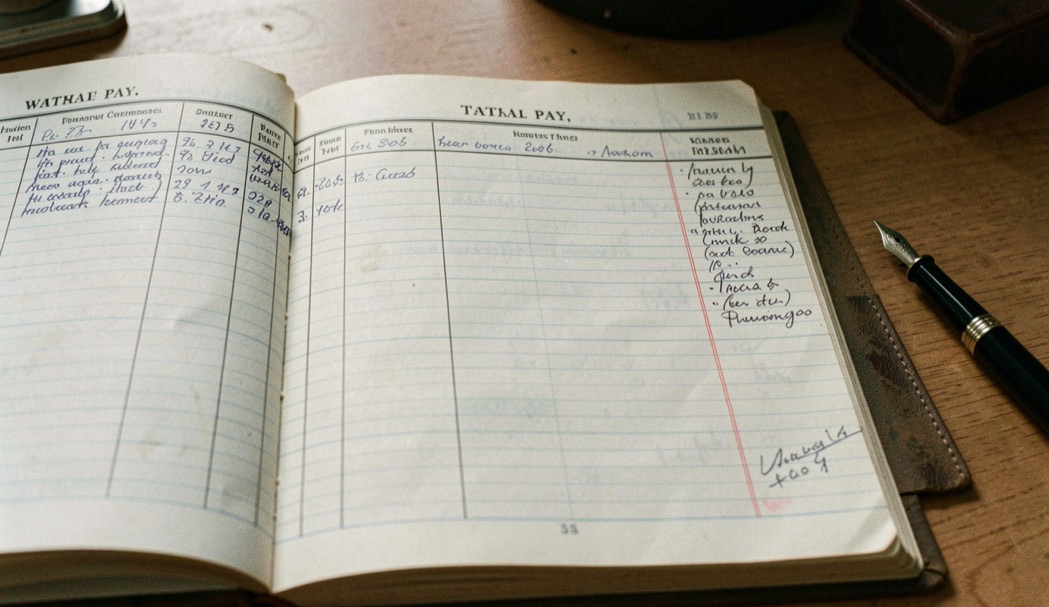
A notebook behind the ledger
Most men left lists; this clerk left explanations. In the margin beside one name he wrote “separated allowance stopped, wife gone to mother”. Beside another he noted “boots replaced, charge remitted”. Such comments rarely survive in formal pay books.
His role connected military bureaucracy and local knowledge. He knew which address was temporary, which mother depended on separation allowance and which employer had promised to keep a job open.
Work and discretion
The clerk checked forms, calculated stoppages and answered letters. He had discretion over small sums but not policy. His notes show sympathy within rules rather than rebellion against them.
Limits of the evidence
We cannot recover his opinions about the war. The notebook records administration, not politics. That restraint is useful because it prevents a private notebook from being turned into a public manifesto.
Where to look next
The service record guide explains the forms he completed, and memorial research shows how his rolls helped identify later casualties.