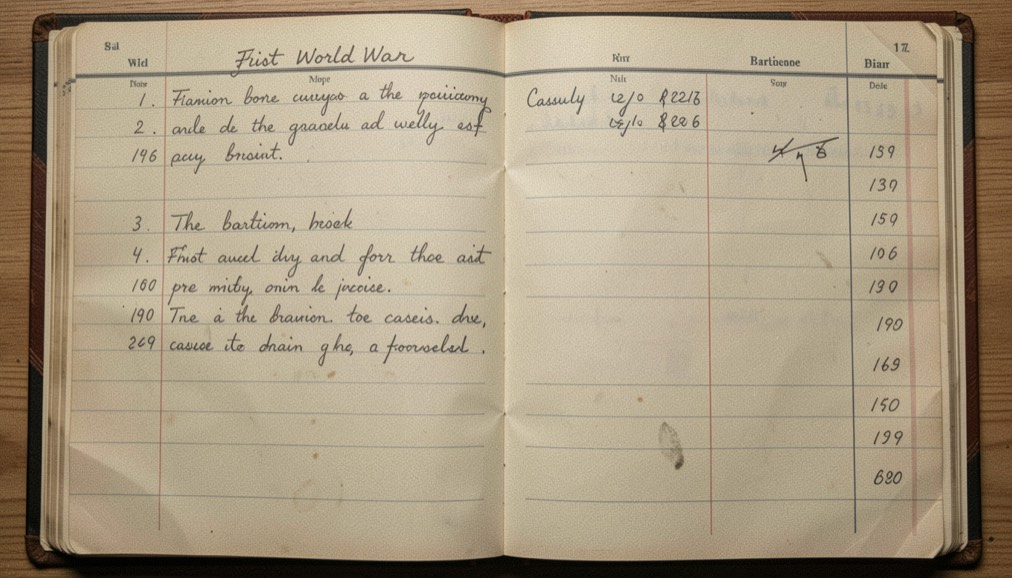
What diaries actually say
Many entries are short: working parties, rain, shelling at dusk, two wounded. They were written by officers under pressure and intended for military use. Their value is chronological precision, not psychological depth.
To place one man correctly, match his battalion number, draft date and transfer orders. A diary can then show whether he was likely present at a named action.
Limits and bias
Diaries usually name officers more often than privates. Silence about a man does not mean he was idle or absent; it may mean he was part of ordinary labour.
Cross-checking
Use pay books, medical admission registers and trench maps together. Where they disagree, note both dates instead of choosing the most dramatic version.
Where to look next
Service record reading explains individual forms, while map methods locate the places behind entries.